
Three years after its 2023 release, Adobe Photoshop’s feature set from that pivotal update continues to shape how photographers, designers, and retouchers approach image editing in 2026. The introduction of precision transformation tools, workflow-focused layer enhancements, and intelligent content-aware capabilities marked a shift from incremental updates to tools that address genuine creative bottlenecks. Understanding these features remains essential for anyone evaluating whether their current Photoshop version meets professional demands or whether the learning curve of newer tools justifies the time investment.
What Makes Adobe Photoshop 2023 Stand Out in 2026
The creative software landscape of 2026 looks markedly different from 2023, yet Photoshop’s position remains remarkably stable. According to market data consolidated by SQ Magazine for 2026, Photoshop commands approximately 41.74% of the graphic design software market, with Creative Cloud reaching an estimated 41 million paid subscribers by year-end 2025. This dominance stems not from marketing, but from the software’s ability to solve practical editing challenges that photographers and designers face daily.
The 2023 release focused on three core improvement areas: precision transformation control, layer management efficiency, and intelligent automation through enhanced content-aware processes. Unlike updates that add features for the sake of novelty, the 2023 toolset addressed specific pain points—correcting perspective distortions without re-shooting, applying consistent styling across complex compositions, and removing unwanted elements with minimal manual intervention. These weren’t theoretical improvements. Users adopted Generative Fill, introduced in Photoshop 2023’s beta cycle, as PetaPixel’s January 2026 coverage confirms, at 10 times the rate of the average new Photoshop feature.
For photographers managing extensive image libraries, the 2023 feature set becomes even more valuable when integrated into a complete workflow. The editing tools introduced in this release work most efficiently when paired with robust organizational systems upstream. Combining Photoshop’s editing capabilities with facial recognition with a photo organizer software creates an efficient pipeline from import through final output, particularly for event and portrait photographers sorting large volumes of images before selecting which to edit.
7 capabilities that define the Photoshop 2023 toolset:
- Transform Warp: Individual anchor point control for precise object reshaping
- Perspective Warp: Correct distorted angles without re-shooting
- Batch Layer Styling: Apply effects across multiple layers simultaneously
- Enhanced Layer Comps: Streamlined design variation management
- Embedded Comments: Keep feedback contextual within project files
- Improved Content-Aware Fill: Better algorithms with more customization
- Content-Aware Move: Relocate objects with intelligent background fill
The question for creative professionals in 2026 isn’t whether Photoshop remains relevant—its market position answers that. The more pertinent question is which 2023 features deliver measurable time savings for specific workflows, and which represent capabilities that most users will rarely activate.
Precision Transformation Tools: Warp and Perspective Control
Image transformation has existed in Photoshop for decades, but the 2023 release refined control to a degree that changes what’s possible without re-shooting. The Transform Warp and Perspective Warp tools share a common goal—giving editors granular control over object shape and angle—but serve distinctly different use cases.
Transform Warp: Granular Control Over Object Shape
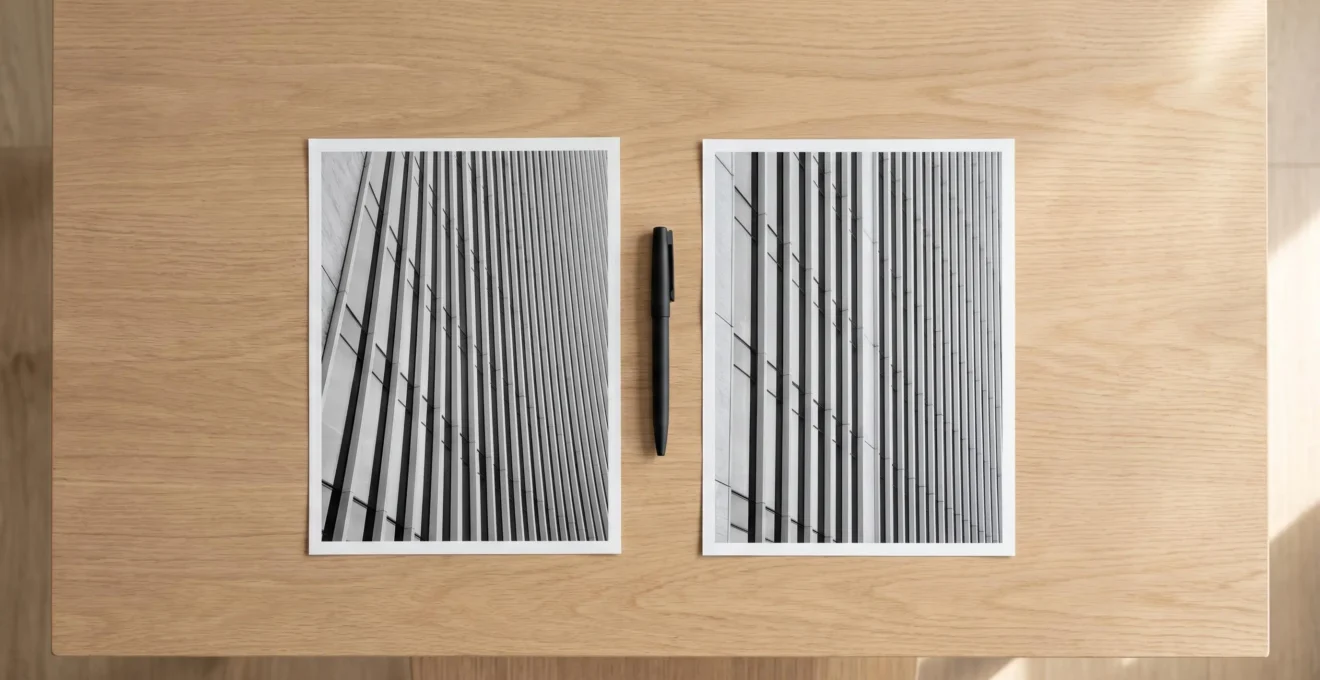
Transform Warp allows manipulation of individual anchor points within an object, creating natural-looking distortions or corrections that standard scaling and rotation cannot achieve. Consider a product photographer who needs to adjust the curve of a fabric banner in a catalog image. Traditional tools would require either accepting the existing drape or re-shooting entirely. Transform Warp enables adjusting individual points along the banner’s edge, creating a more appealing curve while maintaining realistic fabric physics.
The tool operates by overlaying a customizable mesh on the selected object. Each intersection point becomes an anchor that can be moved independently, with the surrounding area adapting fluidly. For designers creating packaging mockups or correcting organic shapes, this level of control eliminates the need for extensive masking and manual painting that older workflows demanded.
Perspective Warp: Correcting Distortion Without Re-shooting
Perspective Warp addresses a different challenge: correcting angular distortion in architectural, product, or interior photography. When shooting buildings from ground level or products at an angle, converging verticals and skewed planes create unprofessional results. Perspective Warp enables defining planes along flat surfaces and independently adjusting their angles.
The workflow requires drawing quads along architectural planes, keeping quad edges parallel to what should be straight lines. Photoshop then allows warping those planes independently. As documented in Adobe’s official Perspective Warp guide, the feature requires at least 512 MB of video RAM to run on 16-bit and 32-bit documents, with 8-bit documents supported at 256 MB VRAM. This technical requirement explains why some users on older hardware report sluggish performance.
For real estate photographers shooting interiors with wide-angle lenses, Perspective Warp eliminates hours of manual correction. A single room photograph with distorted walls can be corrected in minutes rather than requiring careful masking and manual adjustment of each wall plane separately.
Advanced Layer Management: Efficiency at Scale
Layers remain fundamental to non-destructive editing, but managing them becomes exponentially more complex as project scope increases. The 2023 enhancements focused on reducing repetitive tasks when working across multiple layers simultaneously.
Batch Layer Styling: Applying Effects Across Multiple Layers
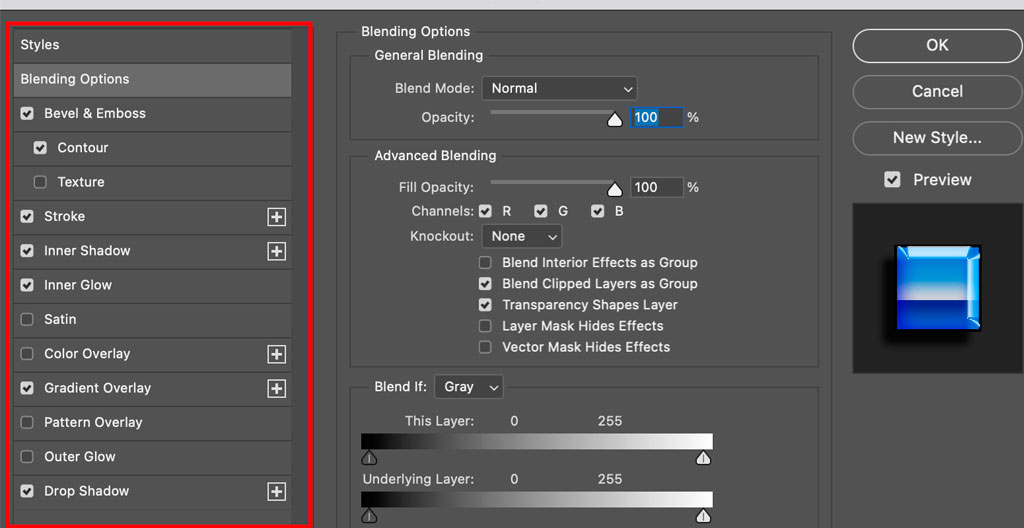
Prior to 2023, applying a consistent drop shadow, gradient overlay, or stroke effect to multiple layers required either copying layer styles individually or merging layers—sacrificing non-destructive flexibility. The batch layer styling capability allows selecting multiple layers and applying layer styles simultaneously, maintaining independent editability.
This proves particularly valuable for designers managing design systems where consistent styling defines brand identity. A UI designer creating a mobile app interface with dozens of button states can select all button layers and apply the brand’s standard shadow and gradient treatment in a single operation. Modifying the effect later updates all instances simultaneously, ensuring consistency without manual verification of each layer.
The time savings scale with project complexity. A simple three-layer composition sees minimal benefit. A complex packaging design mockup with consistent styling requirements can reduce what would take considerable repetitive clicking to under two minutes.
Enhanced Layer Comps: Managing Design Variations
Layer Comps allow saving different visibility, position, and appearance states of layers within a single document—essentially creating multiple design variations without maintaining separate files. The 2023 improvements streamlined switching between comps and reduced the likelihood of comp corruption when layer structures change.
For designers presenting multiple logo lockups, color variations, or layout options to clients, Layer Comps eliminate the file management nightmare of « logo_v1.psd », « logo_v2_final.psd », « logo_v2_final_ACTUAL.psd ». A single document contains all variations, with Layer Comps enabling instant switching during presentations. This reduces version control confusion and ensures all variations stay synchronized with foundational design changes.
Streamlined Collaboration for Remote Teams
The shift toward distributed creative teams accelerated dramatically between 2020 and 2023, creating demand for collaboration tools that keep communication contextual rather than scattered across email threads and messaging platforms. The 2023 release introduced embedded comments directly within Photoshop documents.
This functionality allows team members to place comments directly on specific areas of a composition, visible to anyone opening the document through Creative Cloud. The comment remains anchored to its location, eliminating the ambiguity of email feedback like « can you adjust the logo in the upper right » when the composition has multiple logos and subjective interpretations of « upper right ».
Consider a design team working across time zones on a brand identity project. A creative director in New York can place a comment directly on a specific color swatch requesting adjustment, with the comment visible when the designer in Berlin opens the file the next morning. The feedback is unambiguous—it points to the exact element requiring attention—and the conversation history remains accessible without excavating email archives.
The practical limitation is that embedded comments require all team members to work through Creative Cloud document sharing. Teams using traditional file server workflows or external project management platforms won’t benefit from this feature without adjusting their infrastructure. The collaboration feature works smoothly within Adobe’s ecosystem but doesn’t extend to external stakeholders who aren’t Creative Cloud subscribers.
Content-Aware Intelligence: Fill, Move, and Beyond
Content-aware technology analyzes surrounding pixels to intelligently fill, extend, or replace image areas—reducing what once required extensive manual cloning and painting. The 2023 release refined both Content-Aware Fill and Content-Aware Move with improved algorithms and additional customization controls.
Content-Aware Fill: Removing Unwanted Elements Seamlessly
Content-Aware Fill tackles object removal by analyzing the area surrounding a selection and generating plausible pixel data to fill the void. The 2023 improvements focused on better edge blending and the ability to specify which surrounding areas Photoshop should reference when generating fill data.
When removing a telephone pole from a landscape photograph, for instance, the default algorithm might blend sky tones with ground textures, creating an unnatural result. The 2023 customization options allow specifying that Photoshop should reference only sky areas when filling the pole’s location, producing a more convincing result without manual touchup.
The tool works most effectively when the background is relatively uniform or repetitive—sky, water, pavement, foliage. Removing an object from a complex, non-repeating background like a crowded street scene still requires manual refinement. Content-Aware Fill accelerates the process but doesn’t eliminate the need for skilled retouching judgment.
Content-Aware Move: Relocating Objects Naturally
Content-Aware Move serves a related but distinct purpose: relocating an object within an image while intelligently filling both the void left behind and blending the object into its new location. This proves valuable when composition requires shifting a subject’s position but re-shooting isn’t feasible.
A portrait photographer might realize after a session that a subject positioned slightly left of center would create better compositional balance if moved right. Content-Aware Move allows selecting the subject and dragging to the new position, with Photoshop automatically filling the original location and adapting the subject’s edges to the new background.
The quality of results depends heavily on selection precision. Loose selections that include excessive background generate poor blending. Taking time to carefully outline the object using the lasso or pen tool before activating Content-Aware Move produces significantly better results than quick, imprecise selections.
- If you need to remove an unwanted object completely:
Use Content-Aware Fill. Select the object with lasso or brush, ensure selection includes some surrounding area, use Edit > Content-Aware Fill with default settings as starting point.
- If you need to move an object to a different location in the same image:
Use Content-Aware Move. Make precise selection around object, activate Content-Aware Move tool, drag to new position, adjust Structure and Color settings if blending looks unnatural.
- If you need to extend background or fill empty areas:
Use Content-Aware Fill with Expand mode, or consider Content-Aware Crop for edge extension.
- If you need to clone or duplicate an object elsewhere:
Use Content-Aware Move in Extend mode, or traditional Clone Stamp for more control over texture matching.
Integrating Photoshop 2023 Into a Modern Photo Workflow
Photoshop doesn’t exist in isolation. For photographers, the software represents one stage within a complete workflow spanning import, organization, selection, editing, and output. Understanding how Adobe Photoshop 2023′s capabilities integrate with photo management systems and digital asset management platforms determines whether the editing tools translate to efficiency gains or become bottlenecks.
High-volume photographers—event, wedding, sports—face a distinct challenge. A single event might generate extensive image collections requiring culling to a smaller subset for basic processing, with only a selection requiring advanced Photoshop retouching. Managing this selection process separately from editing creates disconnected workflows where organizational context gets lost.
Workflow Integration Considerations: When integrating Photoshop 2023 with external photo organizers or DAM systems, verify that the chosen platform supports Adobe’s latest file format versions. Some third-party tools may lag behind Adobe’s update cycle. Additionally, establish clear file naming conventions and folder structures before beginning large-scale projects to maintain organization consistency across both editing and management platforms.
Modern photo organizers with facial recognition, keyword tagging, and smart collection capabilities handle the organization and selection phases efficiently. The workflow then hands off selected images to Photoshop for advanced editing—perspective correction, content-aware cleanup, complex compositing—before returning finished files to the organizational system.
For creative teams and agencies managing extensive asset libraries across multiple projects, Photoshop 2023’s collaboration features—embedded comments and cloud document sharing—integrate effectively into broader digital asset management strategies. When scaling beyond individual use, setting up a DAM project provides the structural foundation that Photoshop’s editing and collaboration tools build upon. A well-structured DAM system ensures that edited files remain connected to their metadata, version history, and project context. Without proper asset organization, even the most powerful editing features lose effectiveness when files can’t be located or version control breaks down.
The technical consideration is file format compatibility. Photoshop’s native PSD format maintains all layers, adjustments, and embedded metadata, but creates large files that strain storage systems. Organizations must balance non-destructive editability against storage costs and backup infrastructure. Cloud-based DAM platforms offer solutions but introduce dependency on internet connectivity and subscription costs that smaller operations may find prohibitive.
Is Adobe Photoshop 2023 Worth the Investment?
The question of whether Photoshop 2023 justifies its cost—currently $20.99 per month for the single-app plan or $9.99 per month as part of the Photography Plan including Lightroom—depends entirely on workflow priorities and which bottlenecks create the most friction in daily work.
For photographers who frequently shoot architecture, interiors, or products, the Perspective Warp tool alone can justify the upgrade. The time saved correcting converging verticals and skewed planes across even a dozen images per week accumulates to hours monthly. Product photographers working with catalog clients who demand geometric precision will find the tool indispensable.
Designers managing complex multi-layer compositions with consistent brand styling requirements—UI designers, packaging specialists, marketing teams maintaining brand systems—benefit substantially from batch layer styling capabilities. The efficiency gains scale with project complexity. A freelancer working on simple three-layer social media graphics sees minimal advantage. An agency managing complex packaging designs with strict brand guidelines saves measurable time.
Retouchers and photo editors whose work centers on object removal, cleanup, and composition adjustment will use the refined Content-Aware tools frequently enough to notice improved results and reduced manual touchup time. The enhanced algorithms don’t eliminate the need for skilled judgment but do reduce the tedious pixel-pushing that extends project timelines.
The learning curve for Photoshop 2023’s new features is moderate for users already familiar with transformation tools, layers, and selections. Transform Warp and Perspective Warp extend familiar concepts rather than introducing entirely new paradigms. Budgeting a few hours of experimentation—working through Adobe’s official tutorials and applying tools to personal projects—brings most users to comfortable proficiency.
The calculation becomes less favorable for users whose workflows don’t intersect with the 2023 improvements. A photographer working exclusively in Lightroom with minimal Photoshop compositing needs won’t benefit from advanced layer management. A graphic designer creating vector-based work in Illustrator who rarely edits raster images gains little from Content-Aware enhancements.
Do I need to upgrade to Photoshop 2023 if I’m currently using Photoshop 2021 or 2022?
If you frequently work with perspective correction, object removal, or complex multi-layer projects, the Transform Warp, improved Content-Aware tools, and batch layer styling offer meaningful time savings. If your current workflow doesn’t involve these pain points regularly, the upgrade is less urgent. Evaluate based on your specific bottlenecks rather than general feature lists.
What is the cost of Adobe Photoshop 2023?
Photoshop 2023 is included in Adobe Creative Cloud subscriptions. The Photography Plan (Photoshop + Lightroom) starts at $9.99 per month, while the single-app Photoshop plan is $20.99 per month. Pricing is subject to change and may vary by region.
How steep is the learning curve for the new Photoshop 2023 features?
Most new tools in Photoshop 2023 build on familiar concepts. If you already understand layers, selections, and basic transformation tools, features like Transform Warp and Perspective Warp are intuitive extensions. Content-Aware improvements require minimal new learning since the interface remains similar. Budget a few hours of experimentation to become comfortable with the major additions.
Can I use Photoshop 2023 alongside photo organization software?
Yes. Photoshop 2023 integrates with photo management systems including Adobe Lightroom, Apple Photos, and third-party DAM platforms. For optimal workflow, choose a photo organizer that supports non-destructive editing and can hand off images to Photoshop while maintaining organizational metadata and tags.
Three years beyond its release, the 2023 feature set remains relevant precisely because it addressed practical editing challenges rather than pursuing novelty. The tools work quietly in service of creative goals rather than demanding attention for their own sake. Whether they’re worth the subscription cost depends on whether those specific challenges—perspective distortion, repetitive layer styling, intelligent object removal—represent bottlenecks in daily work or edge cases encountered occasionally.